
Define crown height and visor projection
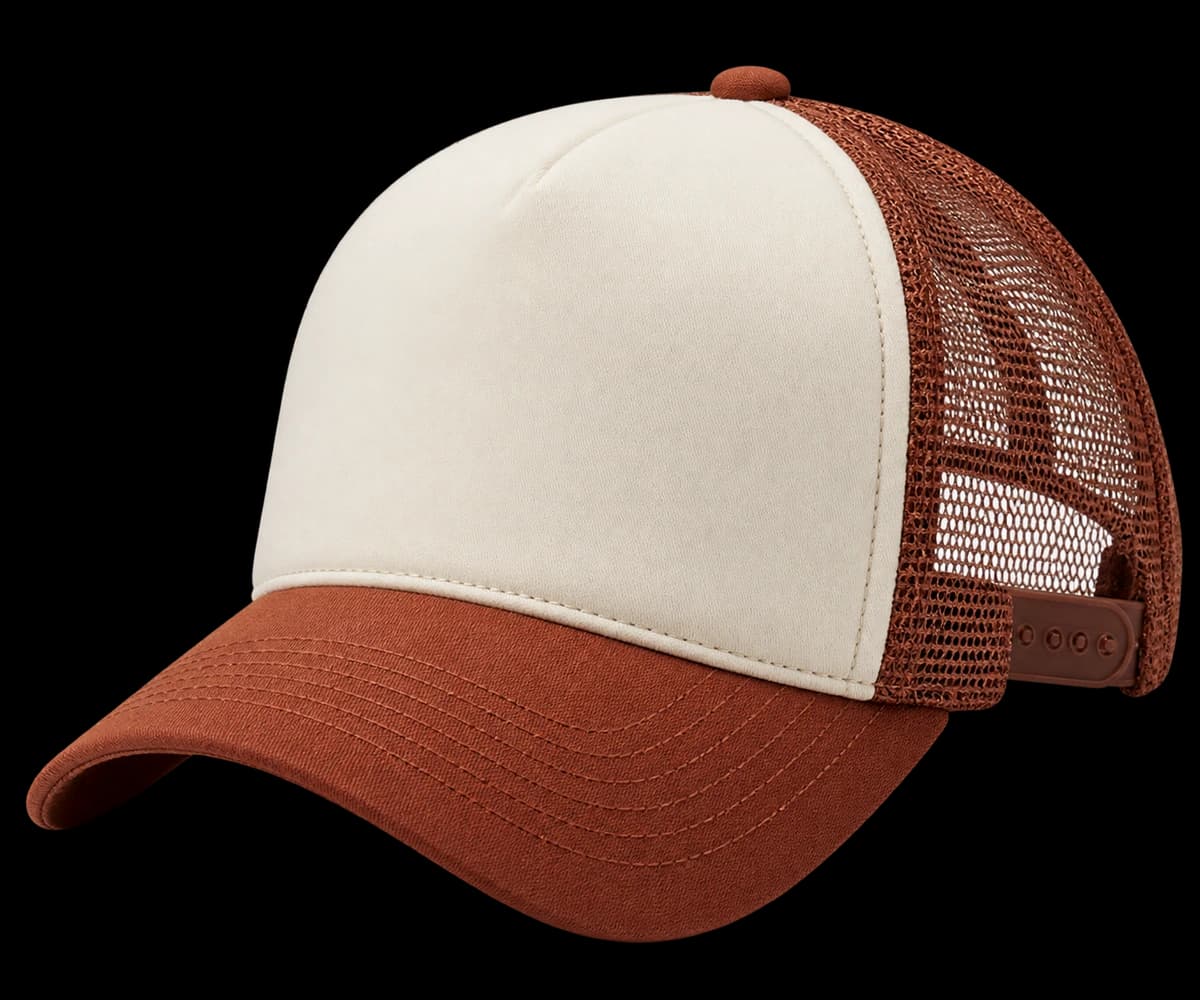
Send a front and profile view that show the brim without perspective distortion. Indicate which proportions matter: width, projection or crown-to-brim relationship. A style label cannot communicate all three. During sampling, photograph the cap using similar views so differences are easy to discuss.
Specify whether the cap is intended to be sold with a flat brim or to be shaped by its wearer. Those are different presentation goals. Ask that the approval photographs show the untreated sample first, with any styling changes identified separately. This keeps the final reference from depending on an undocumented hand adjustment.
Place artwork on the trucker front
Decide how much space should remain above and below the mark. A flat brim creates a strong baseline, making a tilted or low-positioned logo more noticeable. Supply artwork dimensions and a placement sketch, then judge the decorated sample on a wearer before locking the position.
Consider a wider graphic with a shallower height if the front feels crowded, or a compact emblem if more open space is desired. Keep the logo baseline parallel to the approved brim line in the placement reference. Optical alignment should be checked from the front after the cap has been adjusted to fit.

Inspect the material character and how it meets stitching and decoration.
Generated design study; inspect the physical sample before approval.Choose the underbrim and trim colors
The underside appears whenever the wearer raises their head or adjusts the cap. Treat it as part of the colorway and identify the desired stitching color. If additional artwork is wanted there, ask for a separate feasibility review and decorated reference; do not assume the front decoration method transfers directly to the brim.
Review the underbrim alongside the front graphic because both can be visible in ordinary wear. A bright underside may support a graphic collection but distract from a minimal identity. Decide whether the underside is a visible accent or a quiet finish, then assign the brim-edge stitching to that same visual intention.
Review the flat brim before packing
Record how the brim should look at approval and discuss packing expectations for keeping that shape. Check the sample before manually bending it, then note whether any customer shaping is intended. Your retail imagery and care information should match the final approved design, not a styling adjustment made only for a photograph.
During review, rest the cap on a level surface without forcing it into position and photograph the brim edge. Repeat the view after a normal wearing session. Discuss any unwanted change with the sample team and record the desired presentation. Avoid using a product render as evidence that a particular packing method preserves flatness.
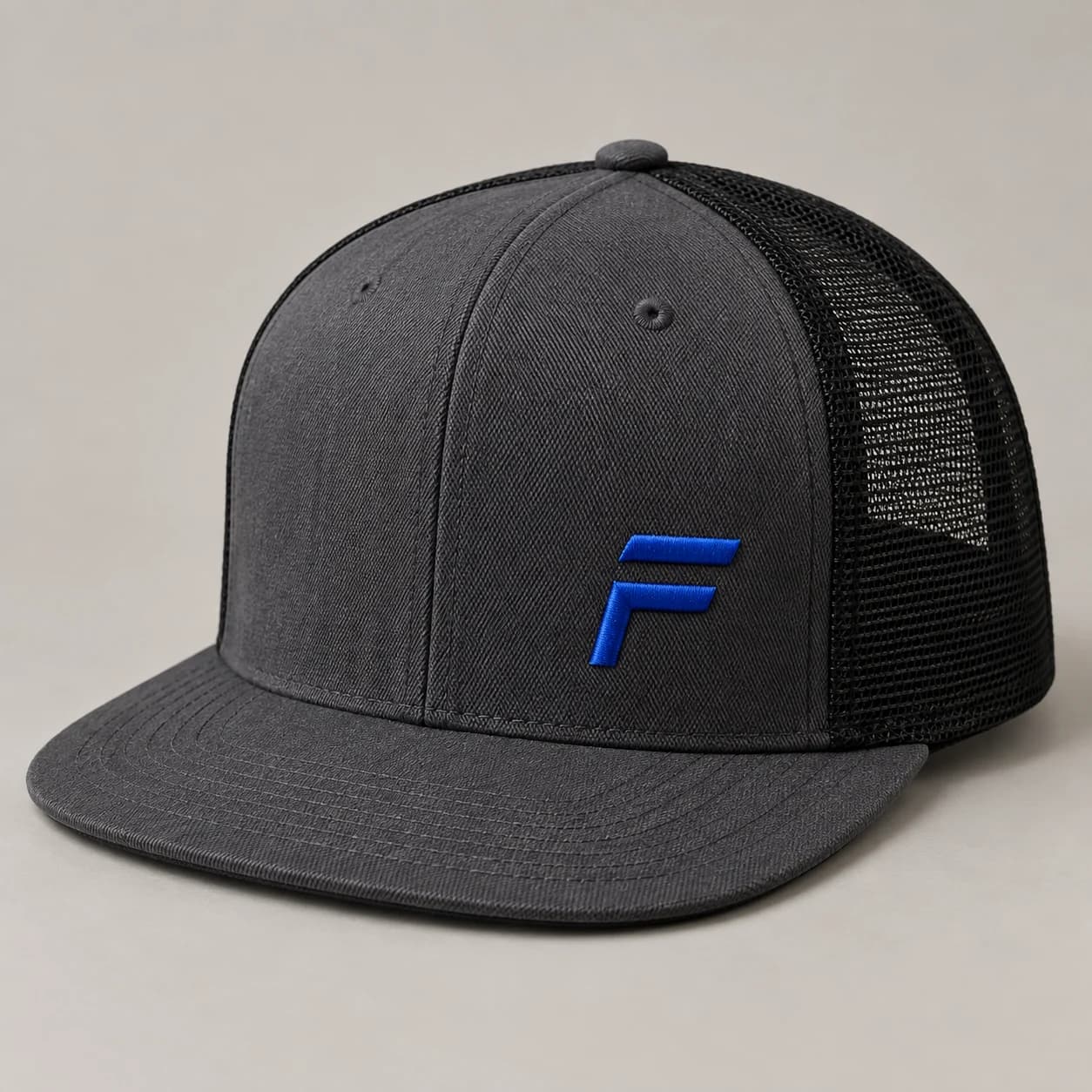
Start with the overall proportion, crown shape and artwork scale.
Generated design study; inspect the physical sample before approval.A practical buying example
If a reference has a tall front but your brand wants a compact crown, annotate that difference explicitly. Keep the visor projection from the reference while reviewing the lower front. After decoration, compare the same camera angle and adjustment setting. Otherwise a different brim angle can make the revised crown look lower without proving that the intended fit changed.
Questions to settle before requesting a sample
Discuss how the approved flat profile will be handled in packing and review any concern about bending. Choose the underbrim deliberately; it is visible when the cap is lifted or worn high. Ask whether the artwork crosses the front seam and which physical sample establishes the final balance. Compare with a curved-brim trucker if the wearer is expected to reshape the visor.