
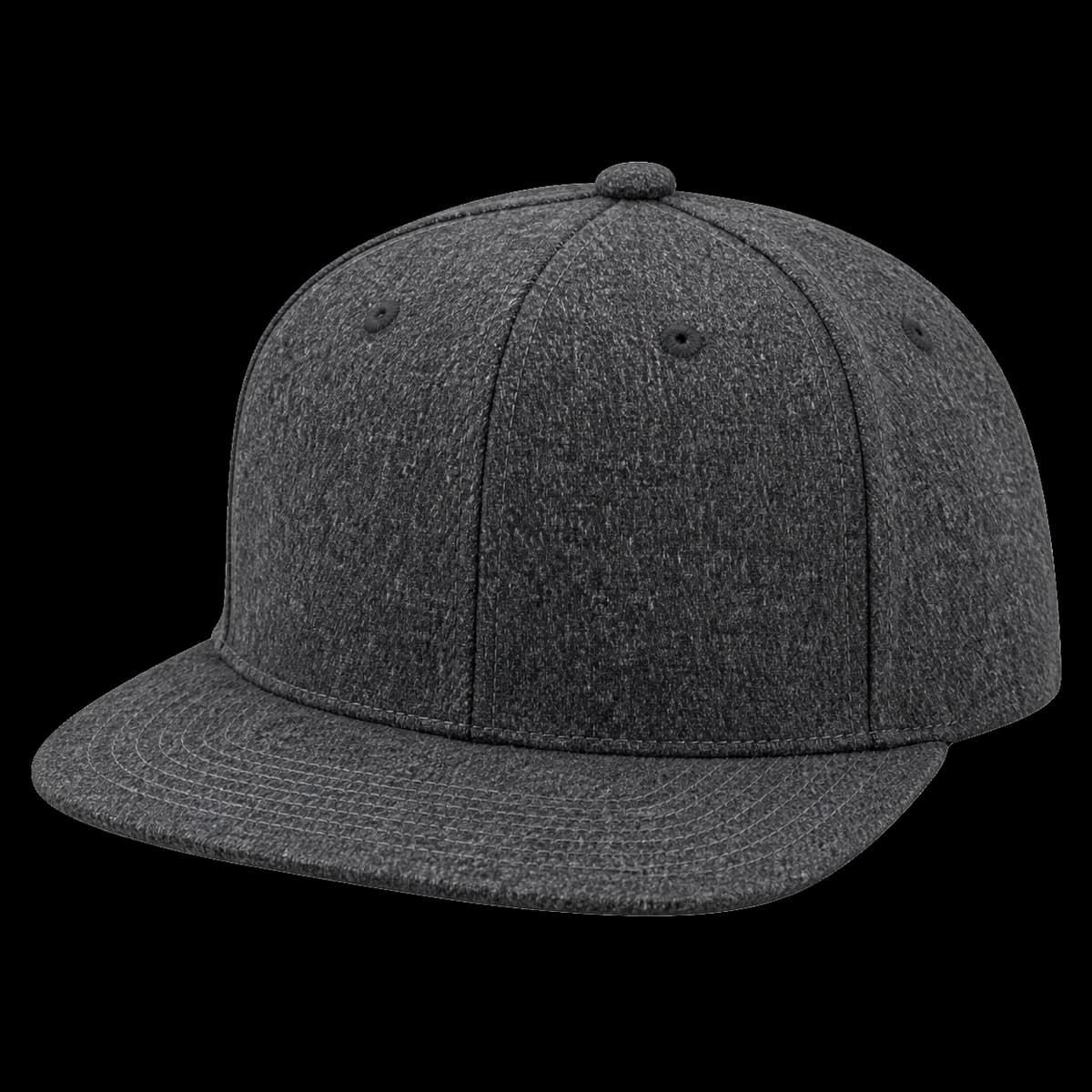
Confirmed fiber specification
Provide a physical or close-up surface reference. Specify whether wool content is required or whether the request is for a brushed appearance; do not treat the two as equivalent.
Attach the physical fabric reference if possible and list any mandatory composition separately. A close-up photo can show surface character but cannot establish fiber content. If the supplier proposes an alternative, compare its specification and hand before accepting it as equivalent. Keep the chosen material reference in the final order documents.
Compact side silhouette
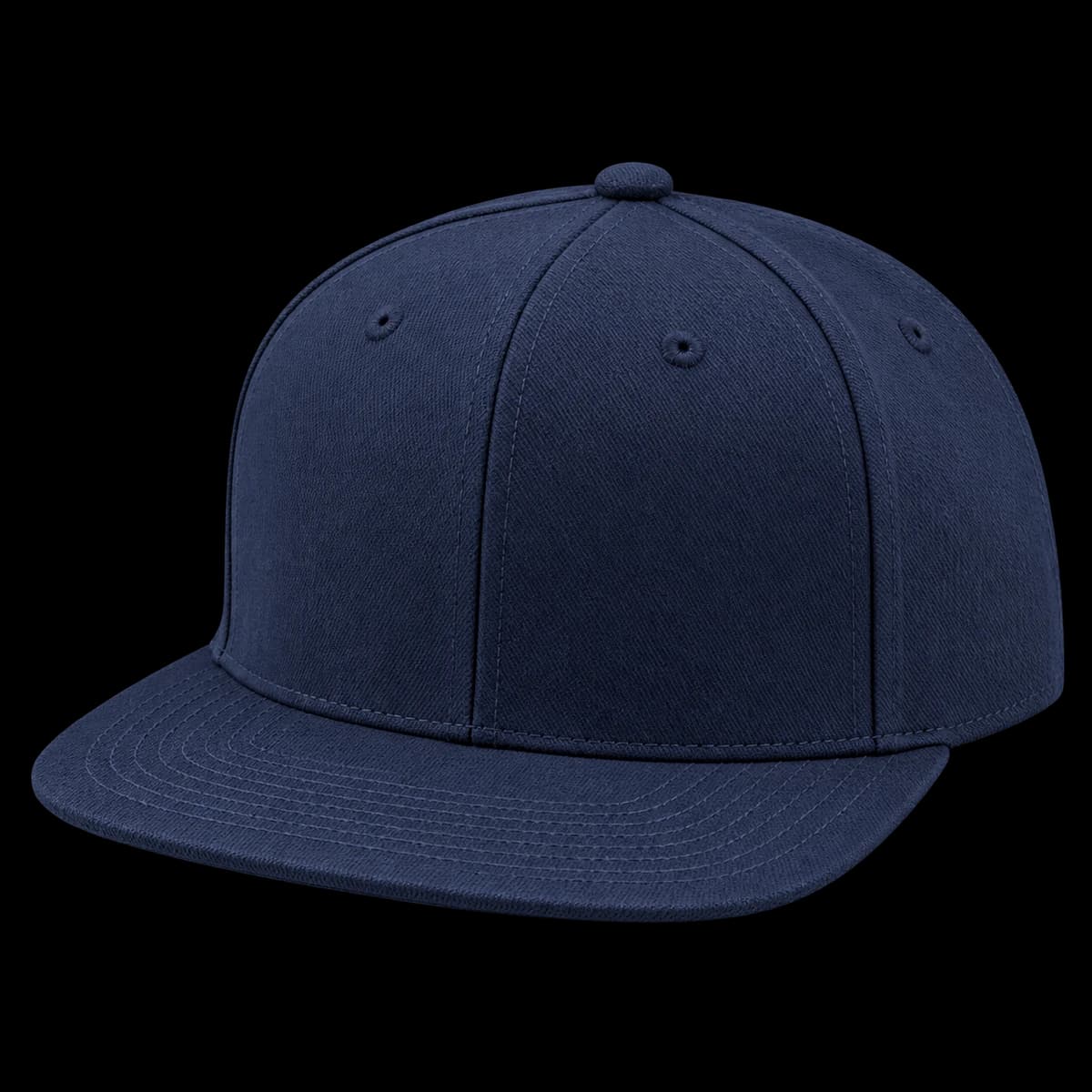
Use a compact side profile to agree crown proportions. Soft surface fibers should not obscure the intended panel junctions or make the crown appear inflated.
A brushed surface can soften the appearance of panel edges. Review crown shape from a normal distance as well as close up. Name the front height and visor relationship you want instead of using “winter snapback” as a fit description. Check that the finished hat still has the intended compact or upright profile.
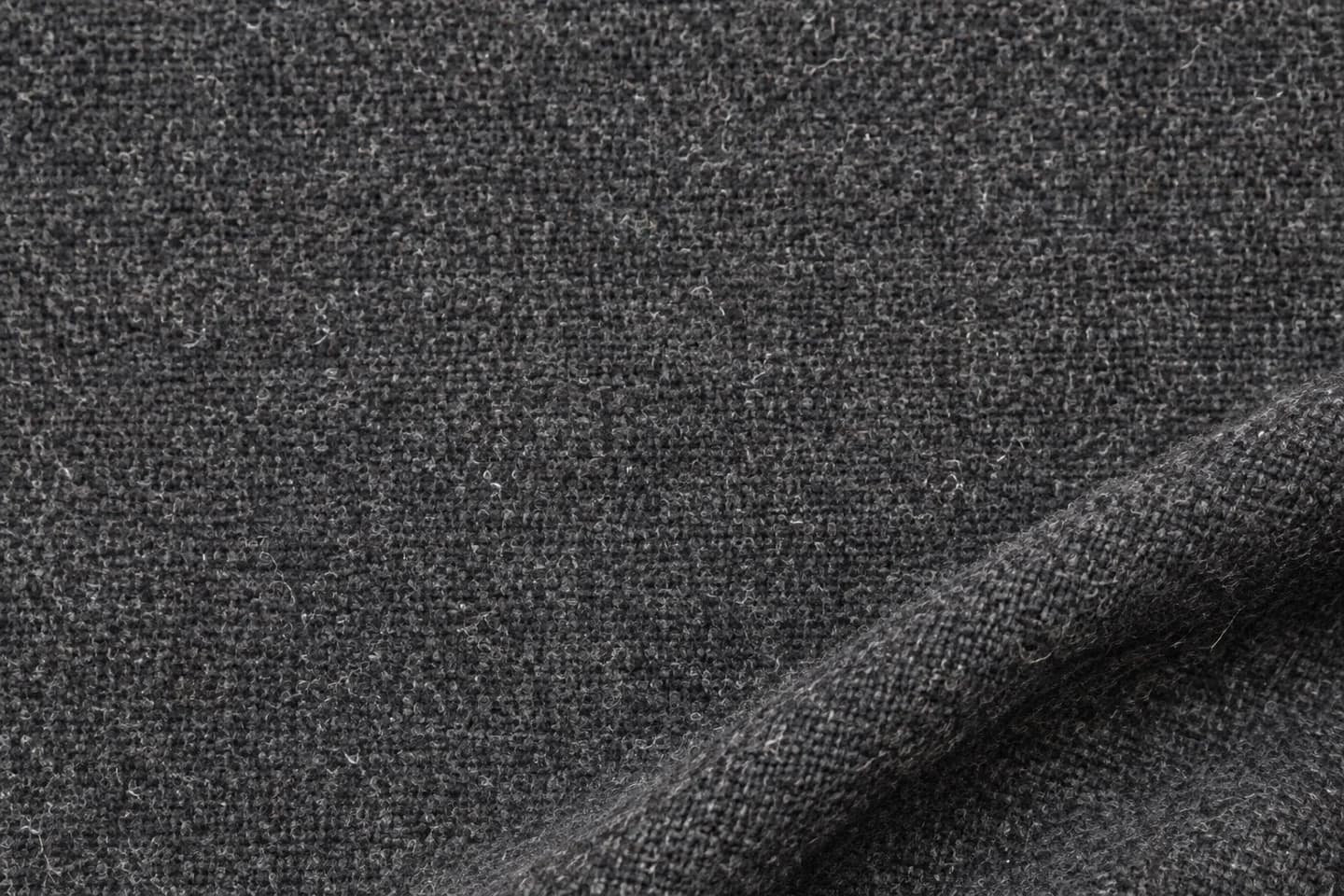
Name the composition, weight and finish you require. Compare the cloth and decorated sample together.
Illustrative texture; not a certified fabric specification.Artwork readability on texture
Review logo contrast on the selected surface. Compare the legibility of small lettering and whether a label is preferable to a dense stitched graphic.
Small low-contrast lettering may be difficult to read against the surface fibers. Compare the actual-size logo on the chosen cloth, including the edge definition and reverse side. A woven label offers another surface but adds its own border and attachment. Decide based on the finished sample rather than a digitally sharpened image.
Inside finish and care information
Agree the composition and care information after the fabric is selected. Include the inside finish and inspect the sample for the intended hand.
Inspect the inside band and seams while wearing the cap. The soft exterior does not establish how the inside feels. Request the confirmed composition information needed for the label and discuss appropriate care wording for the selected materials. Avoid writing wool claims into retail artwork before the material has been agreed.
A practical buying example
A grey brushed cap is shown in the moodboard, but the buyer has not decided whether wool content is essential. The brief should say that explicitly and request a material proposal. Approving the grey shade alone leaves the fiber question open. Once the cloth is selected, review the embroidered wordmark again on that cloth rather than carrying forward approval from a smooth twill sample.
Questions to settle before requesting a sample
Use this direction for a soft surface with a structured snapback silhouette. Ask what the proposed fabric actually contains, how the surface affects the smallest lettering, and how the brim covering coordinates with the crown. Compare with plain twill if a sharply defined graphic matters more than the brushed textile.