
Set bucket hat sizes and measurement points
Decide whether your collection needs one fit reference or several sizes. Provide the intended audience and any existing fit sample. On a bucket hat, crown depth affects where the brim sits relative to the eyes, so circumference alone is insufficient. Record both fit feedback and measurements during sample review.
Use the same wearer or head form for successive approvals and record how far down the hat is worn. A soft bucket can sit at several depths, changing the apparent brim width and logo position. Without a repeatable wearing position, a reviewer may request a pattern change to solve what is actually a styling difference.
Specify brim width and drape
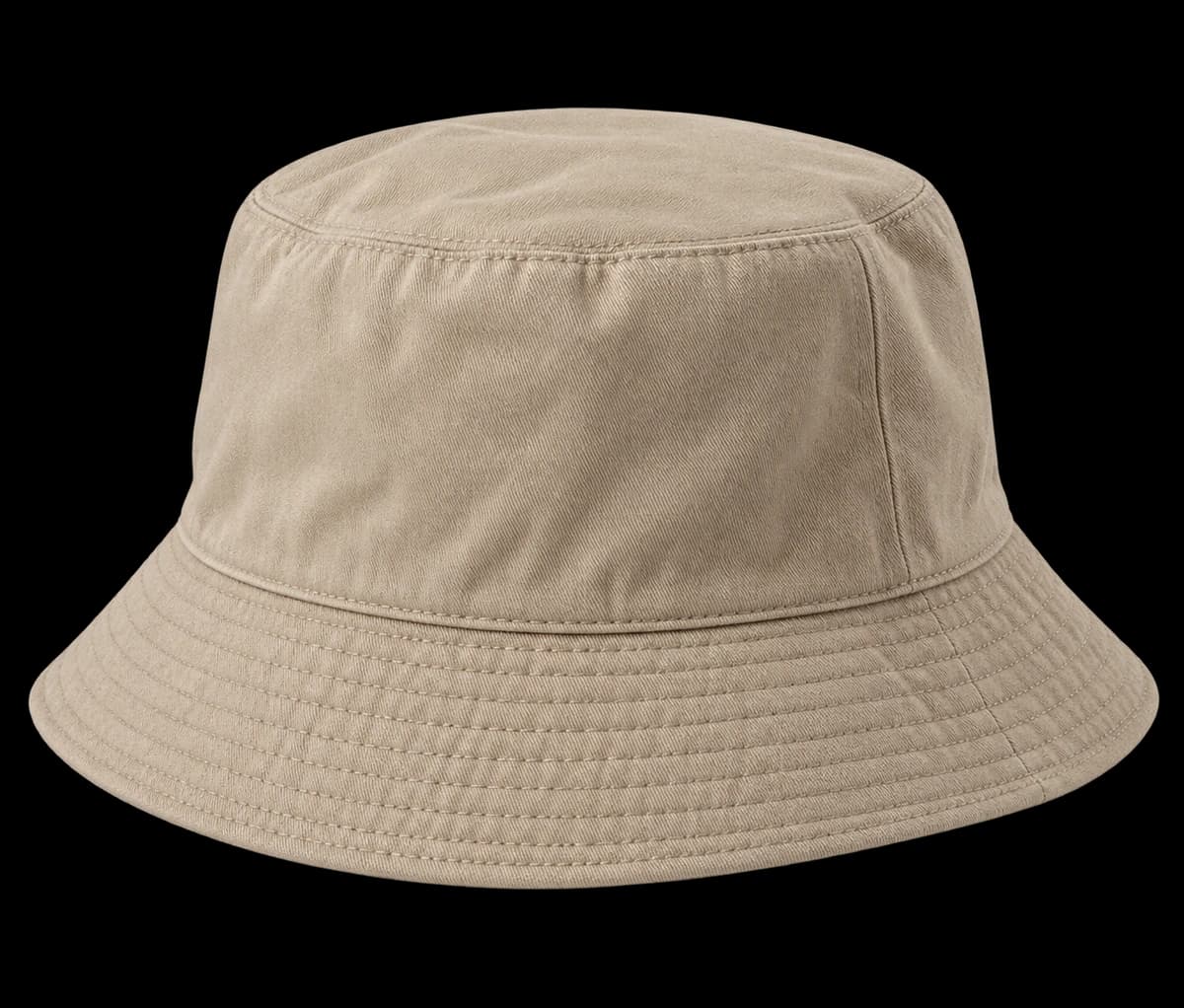
Explain whether the brim should fall softly, sit outward or hold a more defined line. Back up that description with a side photograph. Fabric, brim construction and stitching work together, so avoid choosing them as unrelated options. Evaluate the sewn sample in wear before deciding whether the softness is right.
Compare the brim in a natural position and after ordinary handling, without arranging it for a hero photograph. Decide whether a little irregularity is part of the relaxed expression or whether you want a more even line. Mark the preferred profile in your references so the sample conversation has a concrete target.
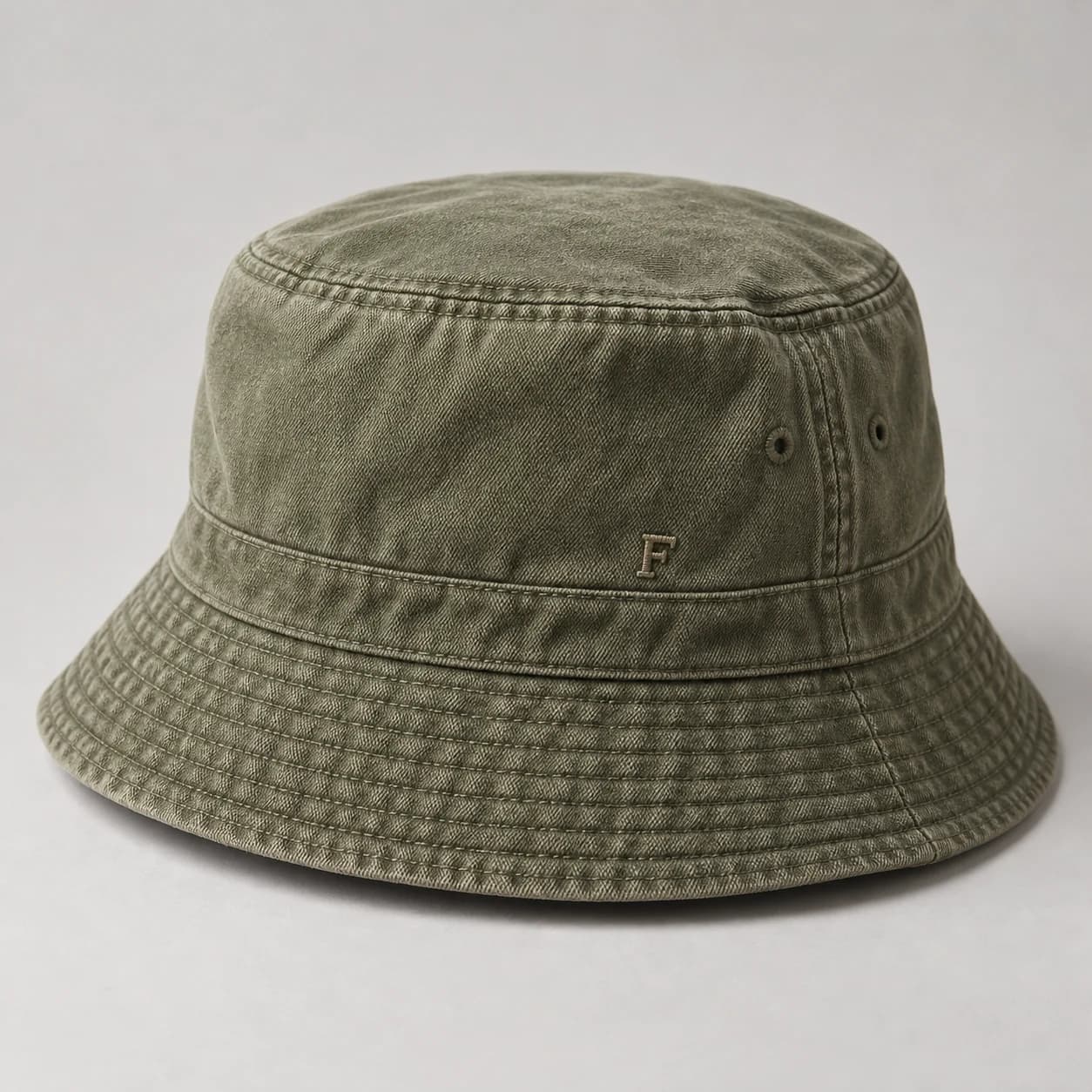
Start with the overall proportion, crown shape and artwork scale.
Generated design study; inspect the physical sample before approval.Approve the washed shade and edges
A washed finish is part of the visual identity, but unevenness still needs boundaries. Use a reference for the overall shade and another for the desired seam character if necessary. Ask how variation will be discussed and documented for the selected process. Keep the approved sample available as the shared visual reference.
If the wash is intended to coordinate with another item, compare the pieces together under consistent light. Texture and construction may make them read differently even with similar base shades. State whether visual harmony is sufficient or a closer match is essential, and discuss that expectation before approving an isolated hat sample.
Position branding on the worn hat
A logo can disappear when a soft brim rolls or slopes upward in front. Review placement with the hat worn naturally and avoid judging only a flat front photograph. Check the decoration for puckering and its effect on the soft crown. Simplify or reduce the mark if the fabric should remain the main feature.
Photograph the mark with the brim in its natural downward position. Check whether the top of the graphic follows the crown cleanly and whether the lower edge is crowded by the brim seam. If more visibility is needed, moving the artwork can be more appropriate than increasing its size and stiffening the soft front.
Start with the overall proportion, crown shape and artwork scale.
Generated design study; inspect the physical sample before approval.A practical buying example
A brand may like the faded seams in one reference but the wider brim of another. State which photograph controls each feature. On the sample, inspect the brim from the side and back rather than asking only whether the front matches. If it hangs too low, mark the area and discuss width, angle and fabric hand separately; a stronger wash is not a precise instruction for changing the brim.
Questions to settle before requesting a sample
For a multi-size order, list quantities against each proposed size and confirm how the sizing is measured. Keep wash appearance and finished measurements in the same approval record. Ask how the inside band and seams feel against the wearer and whether the decoration interrupts the intended softness. If the desired brim must hold a sharper outline, compare a canvas bucket construction before approving this direction.