
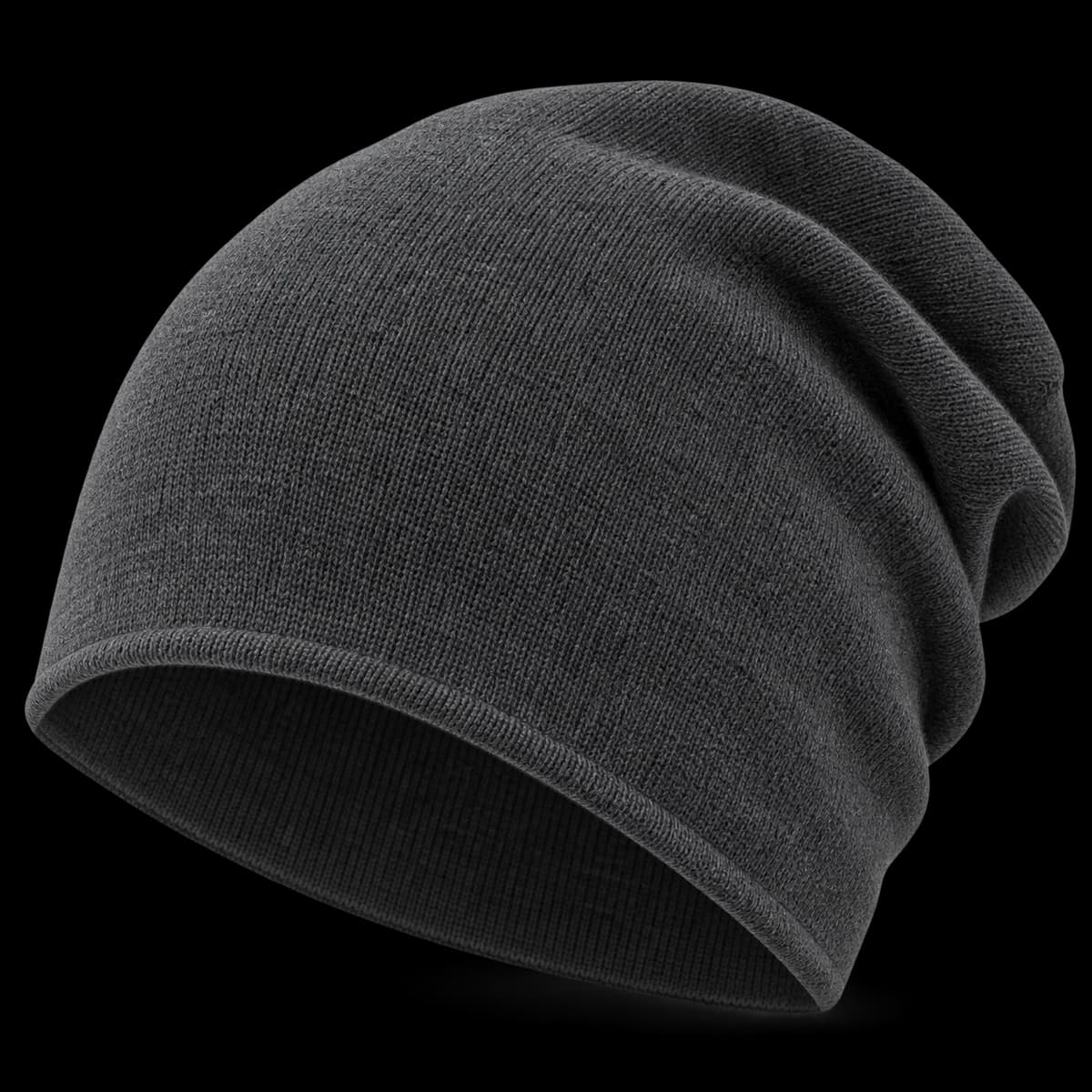
Crown fall in wear
Describe where the crown should fall in a worn side view. Separate crown length from the opening measurement; they control different aspects of fit.
Mark the desired fold or fall behind the head. A product photo with the crown arranged by hand does not establish how it sits naturally. Review the sample after putting it on without styling it into place, then compare the same side view. Identify whether the issue is excess length or insufficient drape.
Opening and length separately
Choose the yarn and structure for the intended hand. A fine-looking knit does not establish composition, warmth or stretch behavior.
Record the opening and overall length separately. If the cap slips, shortening the crown may not address the opening; if it stands upright, widening the opening may not produce the intended fall. Discuss one concern at a time and retain a physical reference for the knit hand you want.
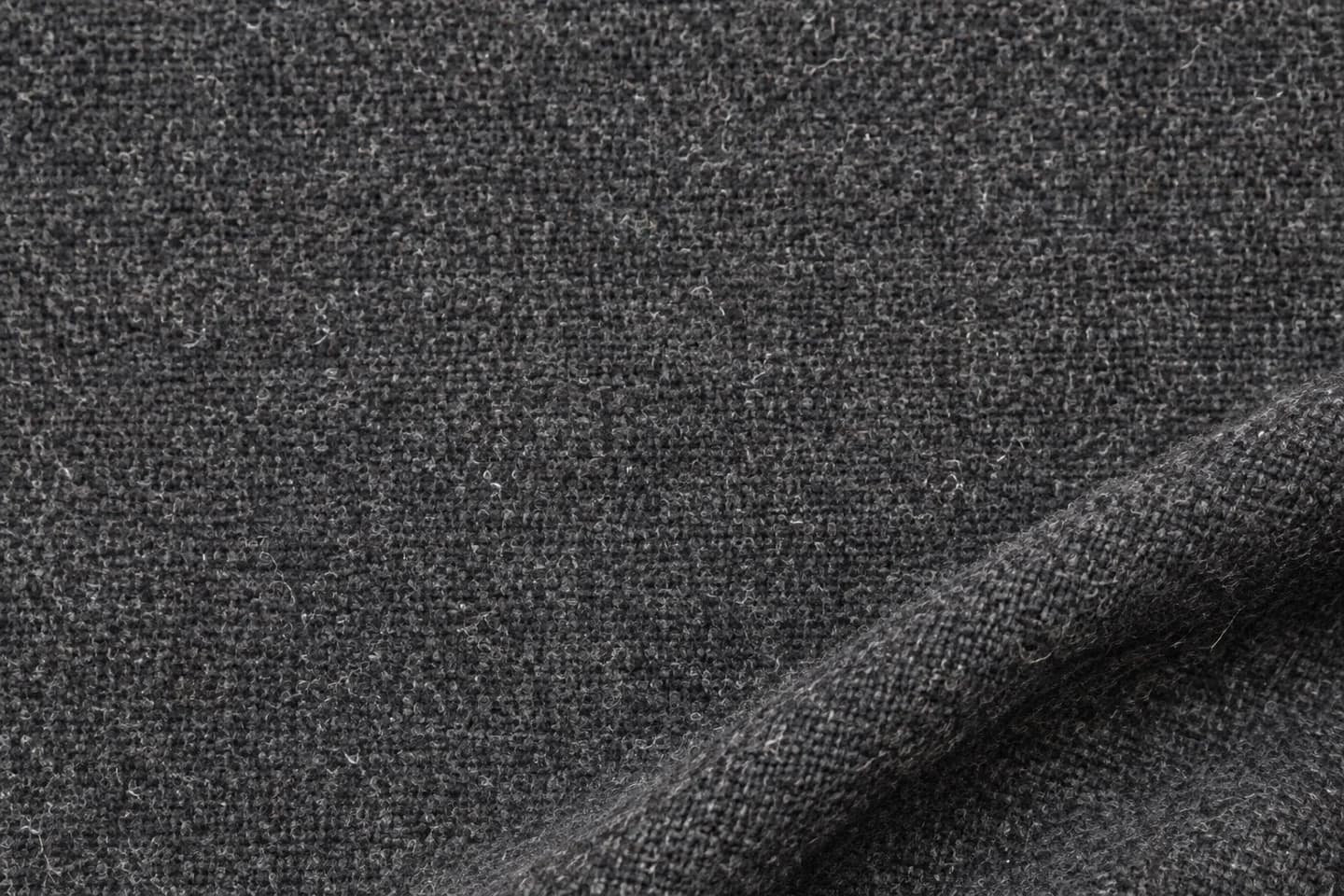
Name the composition, weight and finish you require. Compare the cloth and decorated sample together.
Illustrative texture; not a certified fabric specification.Lower edge and side tab
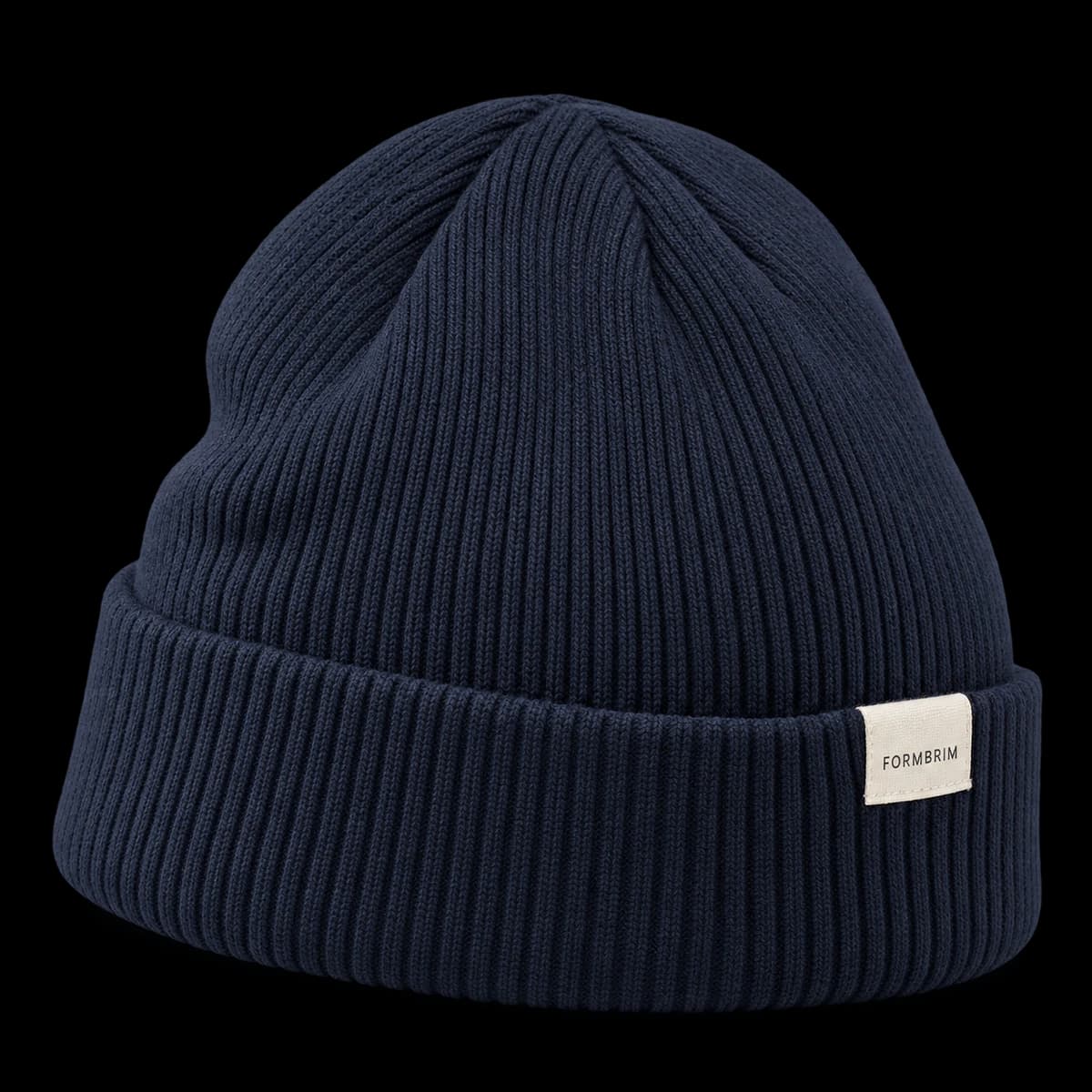
Keep the lower edge and branding light in appearance. Confirm whether a side tab or small mark best supports the relaxed profile.
A heavy badge can interrupt a deliberately light lower edge. Compare a small side tab or restrained mark at actual size. Check both its visible position and the reverse attachment. The label should be reviewed on the worn beanie because fabric movement changes where it appears relative to the face.
Recovery and finishing
Review recovery after wearing and handling. Check the crown join and lower edge against the intended drape, then record the approved dimensions.
Compare the sample after wearing and after it has relaxed using a consistent review method. Look at the lower edge, crown join and any area disturbed by decoration. Record the observed change without calling it a formal performance test. If a measurable recovery requirement matters, define it separately with the supplier.
A practical buying example
A long beanie stands upright instead of falling back. The revision should discuss yarn hand and knit structure alongside crown length. Simply adding more length may create surplus fabric without the desired drape. Keep the opening measurement fixed while comparing the proposed material change, then check that the finished label has not introduced a stiff section near the edge.
Questions to settle before requesting a sample
Choose this shape for its worn drape, not just a long flat measurement. Ask what defines the intended fall, how the opening is measured and whether the crown join follows that silhouette. Compare a regular cuff beanie if the buyer wants a closer fit with less fabric behind the head.