
Define everyday use and functional requirements
An outdoor-inspired appearance is a design direction, not proof of protective performance. Describe the intended use and list any required material properties separately. If testing is needed for your market or product claims, agree the relevant requirement and evidence before making those claims. The illustrated concept supplies no certification.
If your collection needs only the visual language of an outdoor cap, say so explicitly. This keeps the brief focused on color, hand and shape. If a functional claim is essential, identify it before choosing the material and decoration. Visual approval and evidence for a claim should remain separate steps in your review process.
Choose nylon sheen and fabric hand
Ask to see the proposed material in consistent light and handle a swatch where possible. A smooth fabric can appear darker or brighter as its angle changes. Review the sewn cap for unwanted wrinkling and the way the top panels settle. Decide whether that character supports the collection before approving the fabric.
Ask for a front and profile image after the cap has been handled naturally. A smoother studio arrangement may conceal the fabric's everyday creasing character. Decide whether those folds support the lightweight appearance or conflict with a cleaner brand direction. Use that decision to guide material selection rather than retouching expectations for marketing imagery.
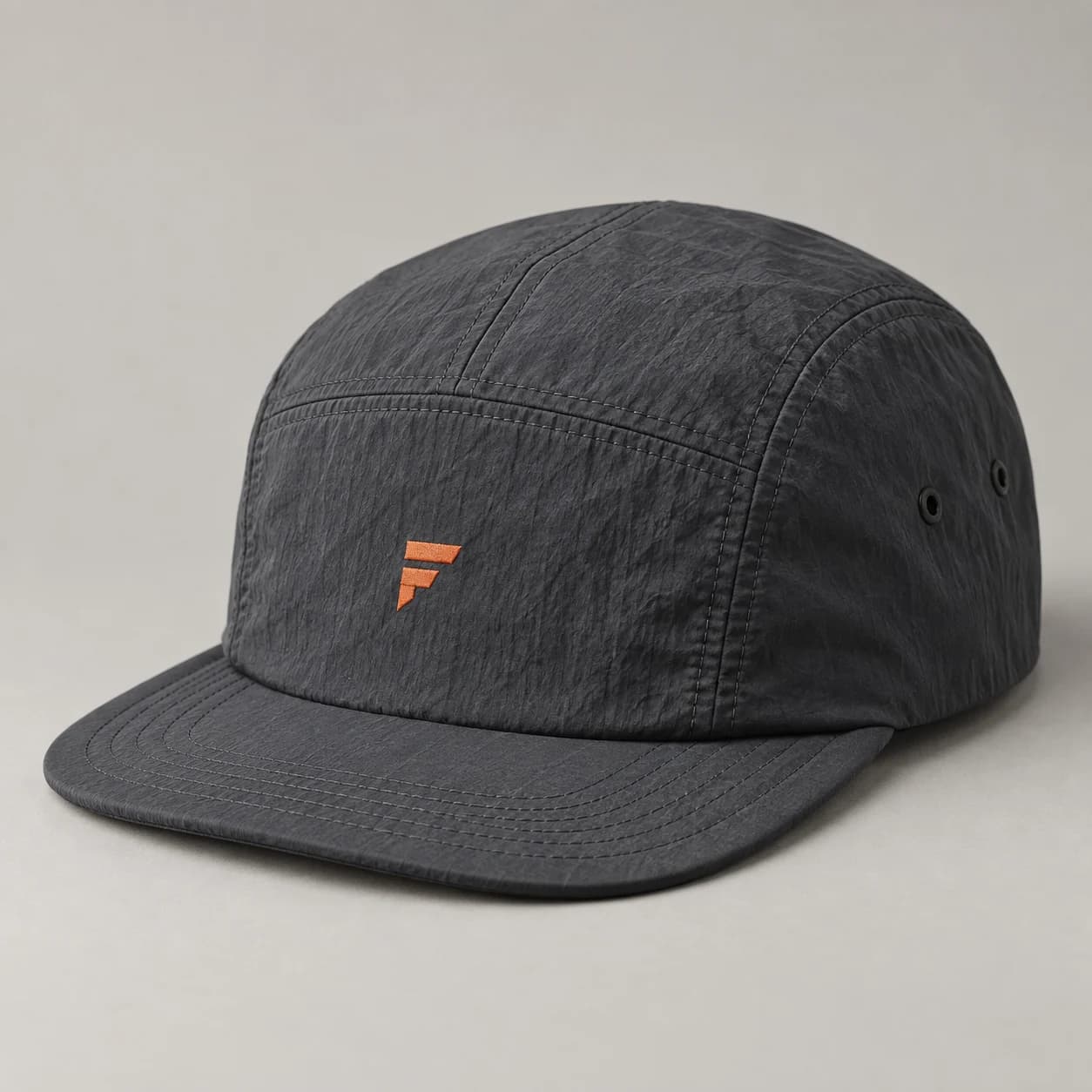
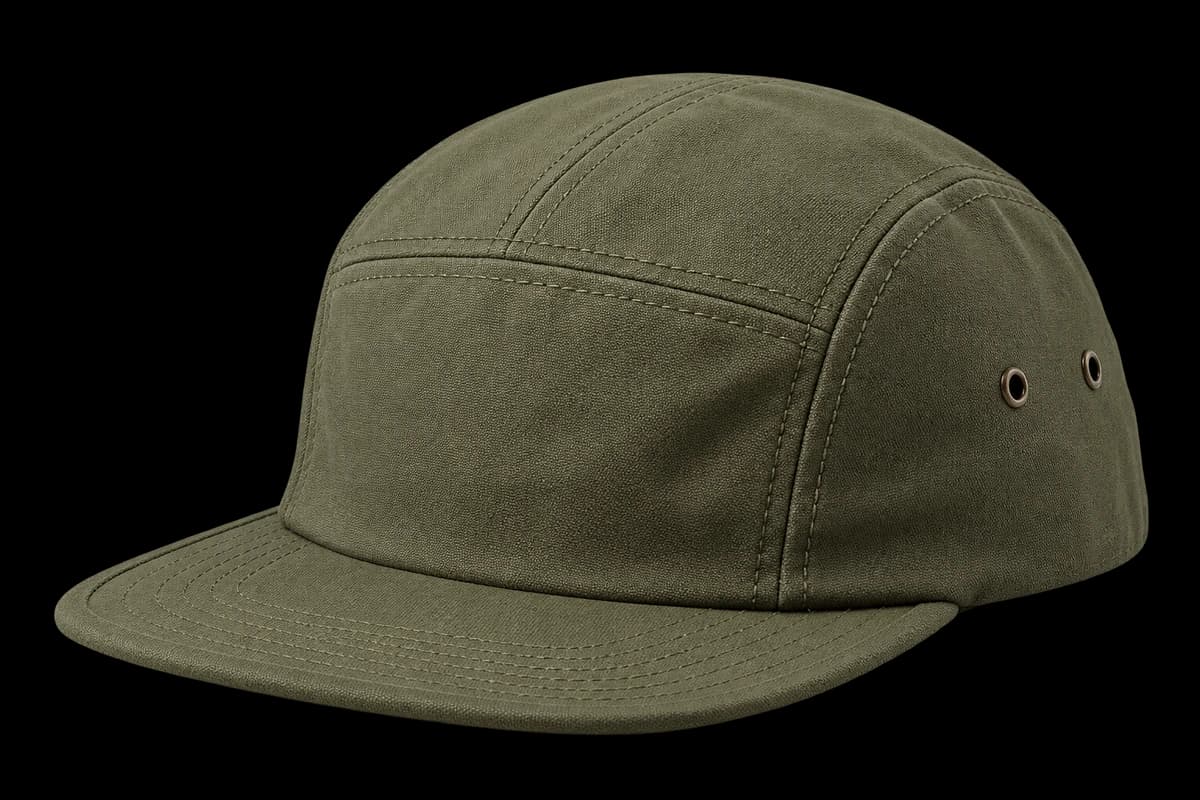
Start with the overall proportion, crown shape and artwork scale.
Generated design study; inspect the physical sample before approval.Sample the proposed decoration method
Submit artwork with size, colors and fine details visible. Ask which treatments suit the selected material and inspect the decorated sample for puckering, edge quality and surface changes. A technique that worked on cotton may need a different approach here. Confirm the final care guidance for the combined fabric and decoration.
For a printed mark, inspect both the edge definition and the surrounding fabric surface. For a label, inspect the corners and any tension around its attachment. Compare these observations with the undecorated material reference. The goal is to choose a treatment that keeps the intended hand and appearance while making the identity clearly readable.
Separate performance claims from appearance
Avoid vague terms such as performance-ready in your specification. State the property, intended context and acceptance evidence you need to discuss. Review closure security and fit as practical design details even if no technical claim is planned. Keep approved evidence separate from visual approval so neither is mistaken for the other.
Create a short requirement table separating appearance, fit and any requested material property. Put the proposed acceptance evidence beside each requirement. For example, a sheen preference needs a visual reference, while a technical claim may need an agreed assessment. This makes it clear what the sample can demonstrate and what still requires separate confirmation.
A practical buying example
For a matte navy camp cap with a small white mark, compare decoration on the actual proposed cloth. If the surface wrinkles around embroidery, first review the combination of material, artwork and process rather than approving a retouched product image. A label or another decoration direction can be considered, but it should be sampled and priced as a deliberate change.
Questions to settle before requesting a sample
Clarify whether the cap is intended for everyday wear or has a defined functional requirement. The word nylon alone establishes neither water resistance nor a tested drying or protective property. Ask for the fabric specification and discuss suitable evidence for any claim you plan to make. Review sheen under consistent light and the crown after normal handling, not only when arranged for a studio photograph.