
Draw the five-panel camp construction
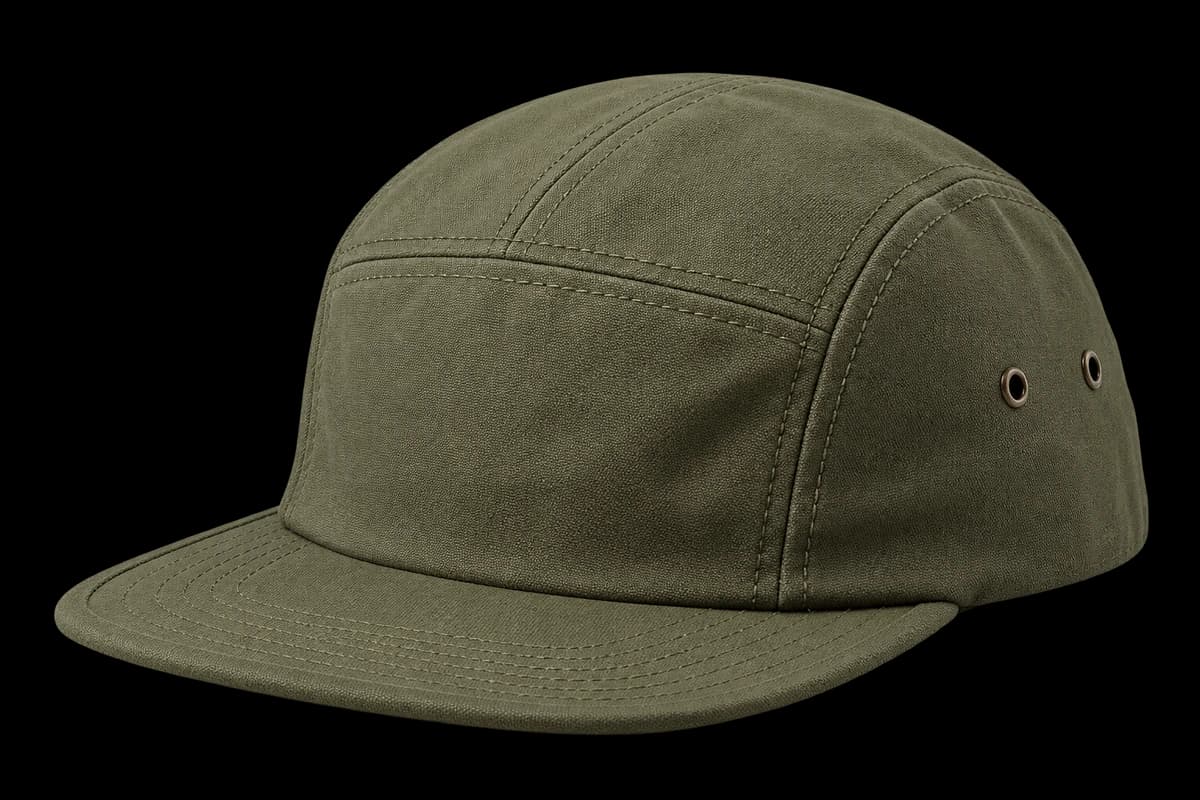
Provide a clear reference showing the front, top and side seam relationships. Five-panel describes a count, not one universal pattern. Identify the features that matter most, such as a shallow crown or broad uninterrupted front. Ask the sample review to compare these points directly against the reference.
Identify whether your reference has a sloping front or a more upright face, and show the point where the top panels meet it. That junction affects the camp silhouette strongly. During review, keep the brim position consistent so a tilt in the photograph is not mistaken for a different panel angle or crown height.
Match canvas hand to the crown profile
Canvas can support several different visual directions. Describe whether you want a soft camp silhouette or a more defined shape, and discuss the fabric hand accordingly. Review how the top panels settle when worn. A cap that looks tidy standing on a table may sit differently on the intended wearer.
If the canvas makes the top look too angular, discuss the material hand and panel proportions as separate variables. A softer fabric may change the expression without achieving the desired fit. Record the area that needs correction and the preferred outcome, then ask which sample change addresses it most directly before revising multiple details.
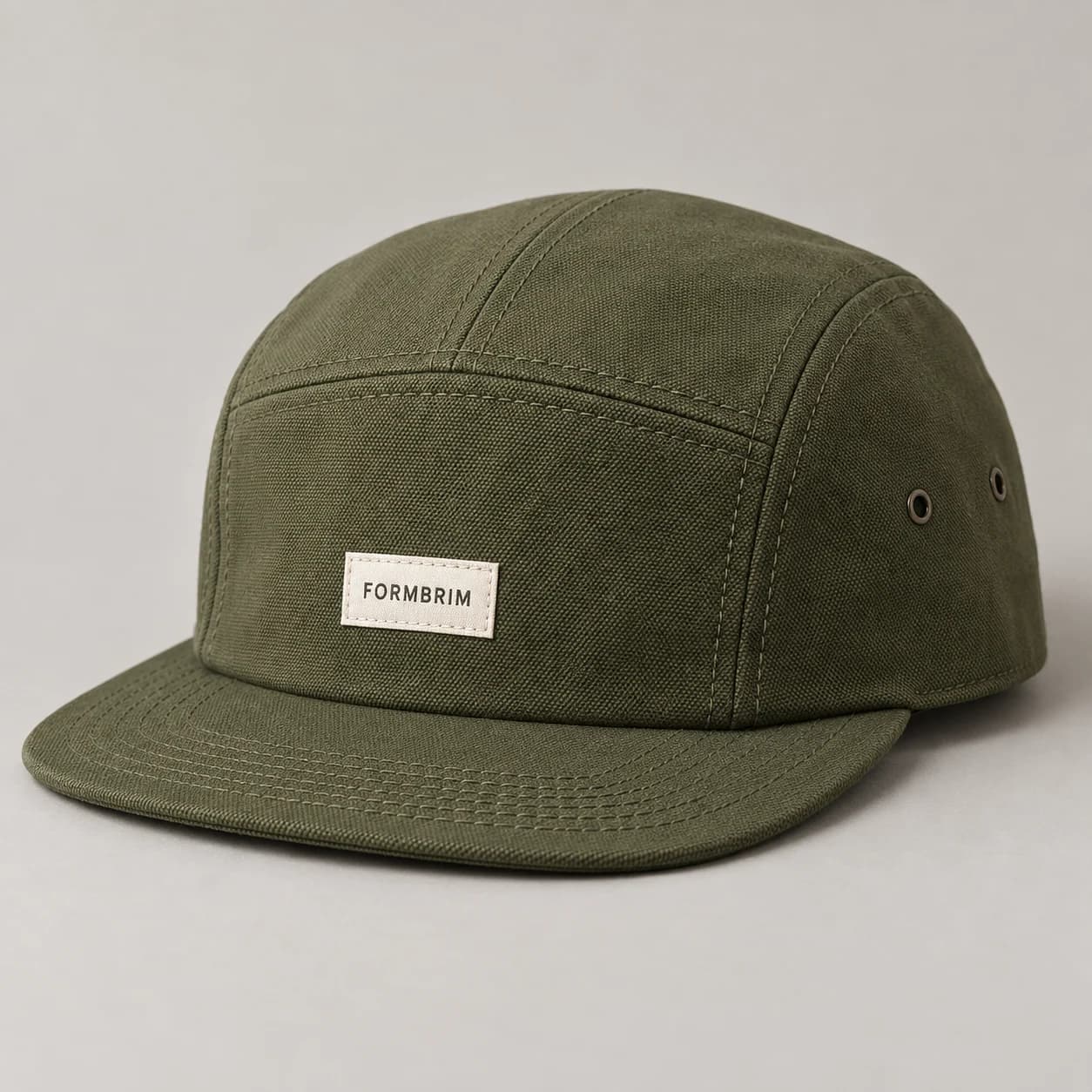
Start with the overall proportion, crown shape and artwork scale.
Generated design study; inspect the physical sample before approval.Measure front label size and placement
Supply label dimensions and a placement sketch showing its distance from the brim seam. Check whether the rectangle follows the crown naturally or pulls at its corners. If your identity uses small text, approve the woven artwork at actual size before approving the decorated cap. Record the final placement in the specification.
Compare the label width with the front panel width at the label's actual height. The available surface may taper, so centering a large rectangle can leave uneven-looking gaps near its upper corners. A smaller label or slightly different vertical position may create better balance while retaining the broad-front character of the camp cap.
Review the rear adjustment range
Try the sample near the smaller and larger settings expected for the audience. Check the rear opening, loose strap and pressure around the sides. Identify any closure preference early so its dimensions can be considered with the pattern. Include the approved adjustment detail in the final brief rather than leaving it as a generic strap.
Check whether the strap adjustment pulls the side panels into an unintended fold at a smaller setting. Review the loose end in the position where it will actually be worn, not tucked away only for photography. Include a rear close view in the approval record so the chosen closure and strap finish remain identifiable.

Read the back, panel junctions and adjustment or continuous crown.
Generated design study; inspect the physical sample before approval.A practical buying example
A buyer may want the shallow side profile of one camp cap but the broader front of another. Mark those two requests separately. When the sample arrives, check the front-to-top junction and rear opening at the intended adjustment. If the front looks too upright, discuss its angle and support rather than reducing every crown dimension at once.
Questions to settle before requesting a sample
Compare canvas hand with the desired profile: a rigid-looking photograph may not represent the relaxed cap you intend to sell. Locate the front label using measurements from the brim seam and center. Ask whether its corners sit flat on the finished front and whether rear adjustment creates excess fabric. Review at more than one strap setting before using the sample as the fit reference.